


29 May Smart Tunnels: The Future of Underground Engineering
Smart Tunnels: How Technology Is Transforming Underground Engineering
Underground infrastructure is undergoing a true technological revolution. As cities continue to grow and the need to optimize urban space increases, tunnels have become a strategic solution for improving mobility, expanding rail networks, developing mass transit systems, and modernizing critical infrastructure.
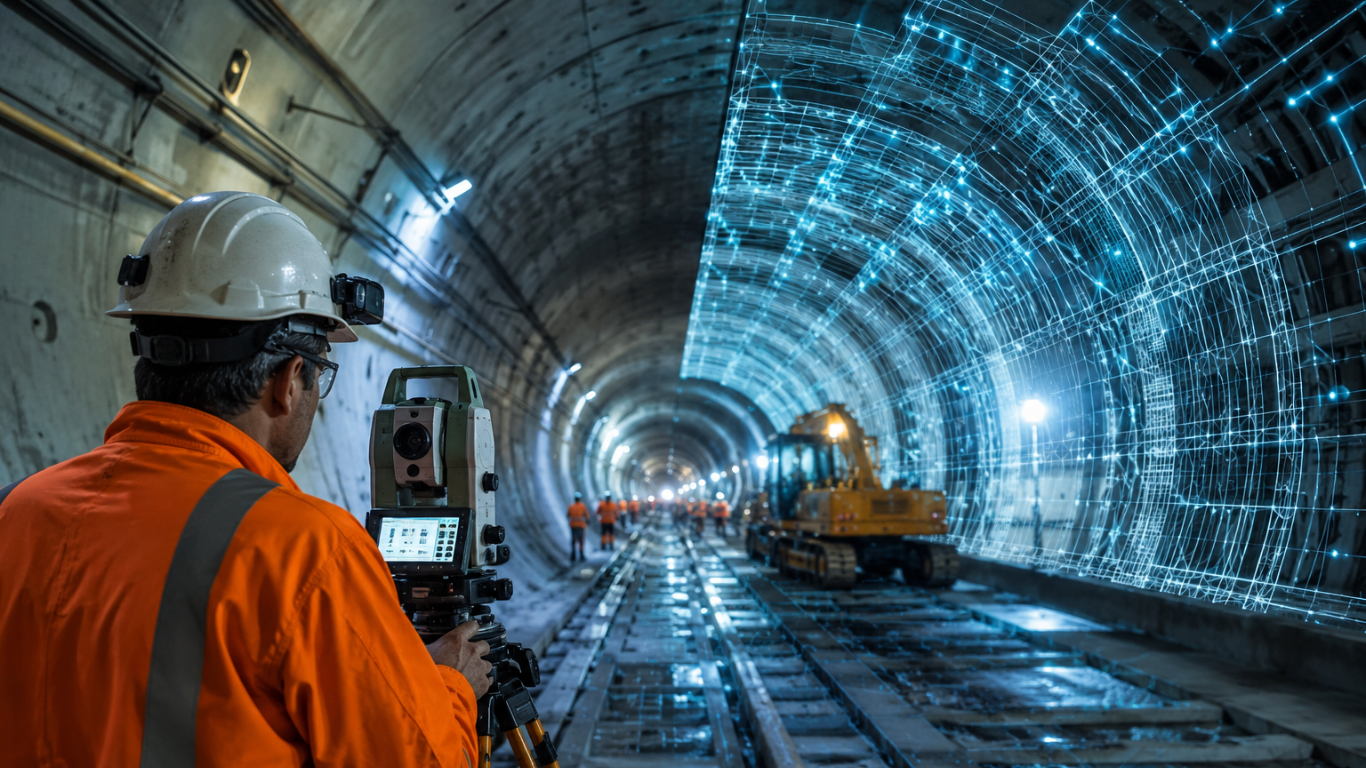
Today, thanks to digitalization, real-time monitoring, and advanced engineering tools, so called smart tunnels are redefining standards of safety, efficiency, and sustainability in underground construction.
A New Era for Underground Engineering
Modern tunnel projects are far more complex than those developed just two decades ago. Increasing demands for safety, geotechnical control, and sustainability have driven the adoption of advanced technologies that enable every phase of a project to be managed with unprecedented precision.
From metro and railway systems to major road infrastructure, digitalization is helping reduce risks, optimize resources, and improve decision making throughout the entire lifecycle of an infrastructure project.
Key Challenges in Underground Projects
- Complex and unpredictable geological conditions.
- The need to maximize safety during excavation.
- Precise control of ground movements and deformations.
- Coordination of multidisciplinary teams.
- Compliance with strict environmental regulations.
BIM and Digital Twins: A Complete Project Overview
One of the most transformative tools in underground engineering is Building Information Modeling (BIM). This methodology enables engineers, contractors, and project managers to work within a shared digital model that integrates geometric, structural, and operational information.
The natural evolution of BIM is the use of digital twins, virtual replicas of infrastructure assets that allow teams to simulate performance, analyze scenarios, and monitor tunnel operations once the infrastructure becomes operational.
Benefits of BIM in Tunnel Projects:
- Improved coordination between disciplines.
- Reduced construction errors.
- Optimization of costs and schedules.
- Better resource planning.
- Greater control over the infrastructure lifecycle.
Real Time Monitoring for Enhanced Safety
Safety remains one of the biggest challenges in any underground project. As a result, the installation of sensor networks capable of continuously monitoring critical parameters during excavation and construction is becoming increasingly common.
These systems allow engineers to monitor ground movements, structural deformations, vibration levels, water pressure, and other key indicators required to ensure infrastructure stability.
Advanced Surveying and Geotechnical Modeling
- High-precision 3D laser scanners.
- Drones for inspections and surveys.
- Robotic total stations.
- Advanced GNSS systems.
- Geospatial modeling software.
The Future of Smart Tunnels
Technological advancement will continue to accelerate in the coming years. The integration of artificial intelligence, predictive analytics, and automation will further optimize the management of underground infrastructure, improving operational efficiency while reducing maintenance costs.
The tunnels of the future will not simply serve as transportation infrastructure; they will become intelligent assets capable of collecting, analyzing, and processing vast amounts of real-time data. This capability will enable operators to anticipate incidents, optimize resources, and make faster, more accurate decisions throughout the infrastructure lifecycle.
Furthermore, the growing need to build more sustainable and resilient cities will drive the development of innovative solutions designed to minimize the environmental impact of underground projects. From low-carbon construction materials to smart energy systems, underground engineering will play a fundamental role in shaping the cities of tomorrow.
The combination of digitalization, connectivity, and automation will also enhance the user experience by improving infrastructure reliability and reducing operational disruptions through more effective maintenance strategies.
Trends Shaping the Future of Smart Tunnels
- Artificial Intelligence for Infrastructure Management
- Data-Driven Predictive Maintenance
Through continuous monitoring and advanced analytics, operators will be able to anticipate equipment wear and infrastructure deterioration. This approach will reduce repair costs, minimize service interruptions, and extend asset lifespan.
- Automation of Inspections and Operations
The use of robots, autonomous vehicles, and remote inspection systems will become increasingly common in tunnels and underground infrastructure. These technologies will improve worker safety while enabling faster, more accurate, and more frequent inspections.
- Integration with Smart Cities
Smart tunnels will become increasingly connected to other urban systems, forming part of digital ecosystems capable of optimizing mobility, energy consumption, and emergency management. This integration will support more efficient and sustainable urban planning.
- More Sustainable and Efficient Construction
- More Advanced Digital Twins