


30 Sep What is Revit, and what is it used for in engineering and construction?
What is Revit?
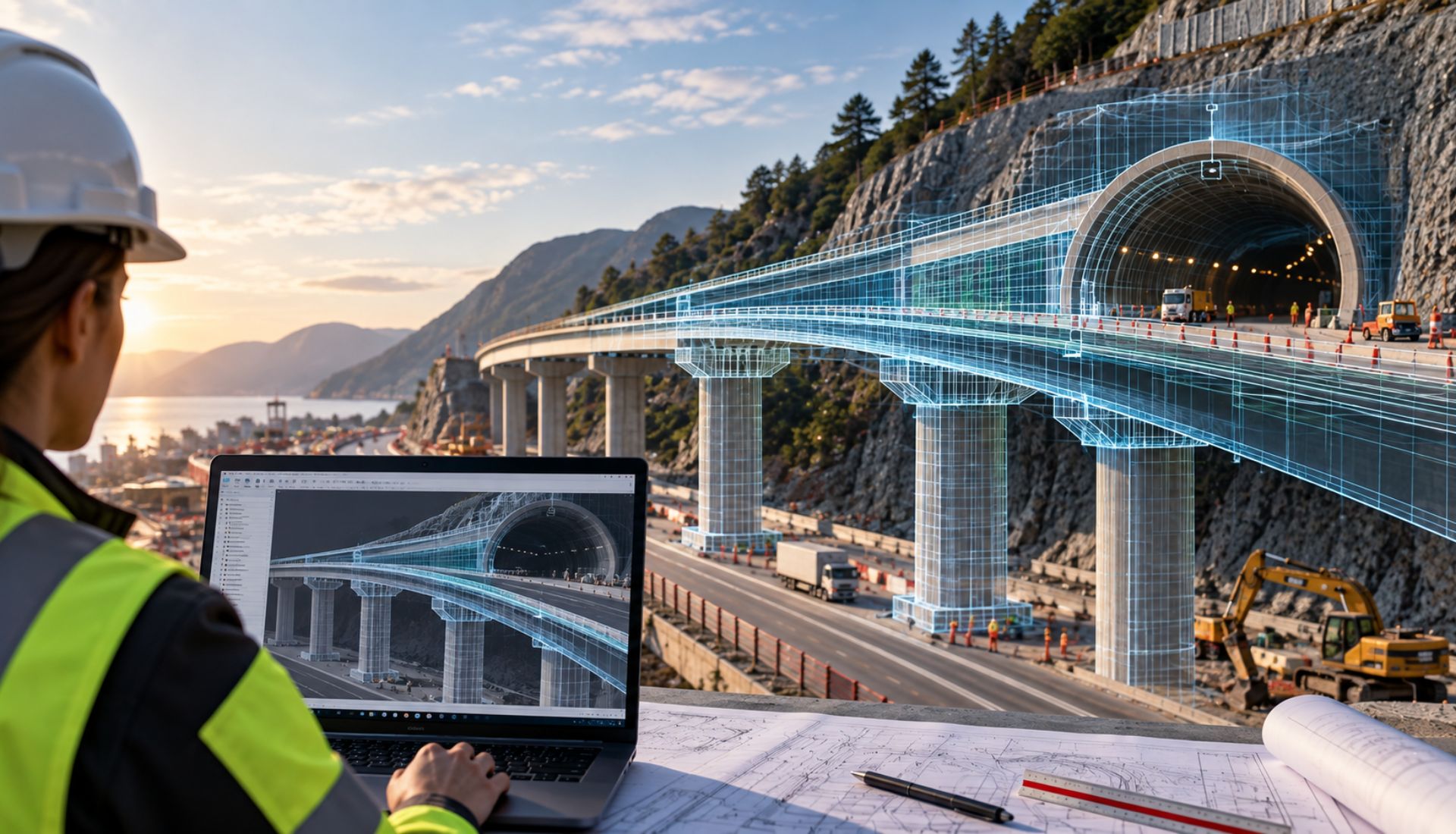
Revit is a BIM modeling tool that allows professionals to design and manage buildings and infrastructure through a centralized digital model.
Each element incorporated into the model contains specific information. For example, a wall can include data about its dimensions, materials, properties and construction characteristics.
This allows professionals to work with a coordinated model in which changes made to one part of the project can be reflected throughout the rest of the documentation.
Revit and BIM methodology
Although Revit and BIM are closely related, they are not the same. BIM is a working methodology, while Revit is one of the software tools that enables its development.
The BIM methodology facilitates collaboration and information exchange between the different professionals involved in a project, while Revit provides an environment for creating and managing the digital model. If you want to learn more about BIM, visit our blog.
What is Revit used for?
Revit is used to develop different stages of a project’s design and documentation. Its main applications include:
- Creation of 3D models.
- Development of drawings and technical documentation.
- Coordination between different disciplines.
- Generation of quantities and schedules.
- Detection and prevention of potential clashes.
- Management of information associated with project elements.
Revit in engineering
Revit in construction
In construction, the model can be used to support project planning and execution. The available information allows teams to consult the characteristics of different elements and improve coordination between the parties involved.
Revit and the future of digital construction
The use of Revit, BIM and other digital tools is transforming the way architecture, engineering and construction projects are designed, coordinated and managed.
In large infrastructure projects, having professionals who are familiar with these tools is particularly relevant, given the amount of information and disciplines that need to be coordinated.
The role of specialized professionals
Technology is a fundamental part of this transformation, but its implementation also depends on qualified professionals capable of interpreting information, developing models and coordinating different stages of a project.
At Protecnium, we provide specialized professionals in engineering, construction and infrastructure, adapted to the technical requirements of each project and capable of working in international environments.
If you want to be part of international engineering and construction projects, you can check our job opportunities and discover the opportunities available at Protecnium.